A Garden Designed to Be Seen
Jardin Majorelle is, in many respects, a garden made for the eye. Jacques Majorelle was first and foremost a painter, and every decision he made in the garden — the choice of colours, the arrangement of plants, the positioning of architectural elements — was guided by visual instinct. The result is a garden that rewards the careful observer at every turn: around each corner lies a new composition of colour, texture and light that feels simultaneously spontaneous and deeply considered.
Photography has been permitted in the garden since it first opened to the public, and the garden has appeared in countless magazines, books, films and social media feeds over the decades. It is one of the most photographed places in Africa. Yet photographs — however beautiful — can only partially convey the experience of being within the garden: the sounds, the scents, the quality of the light, the sense of enclosure and revelation as you move between different zones. Treat this gallery as an introduction, not a substitute, for a visit in person.
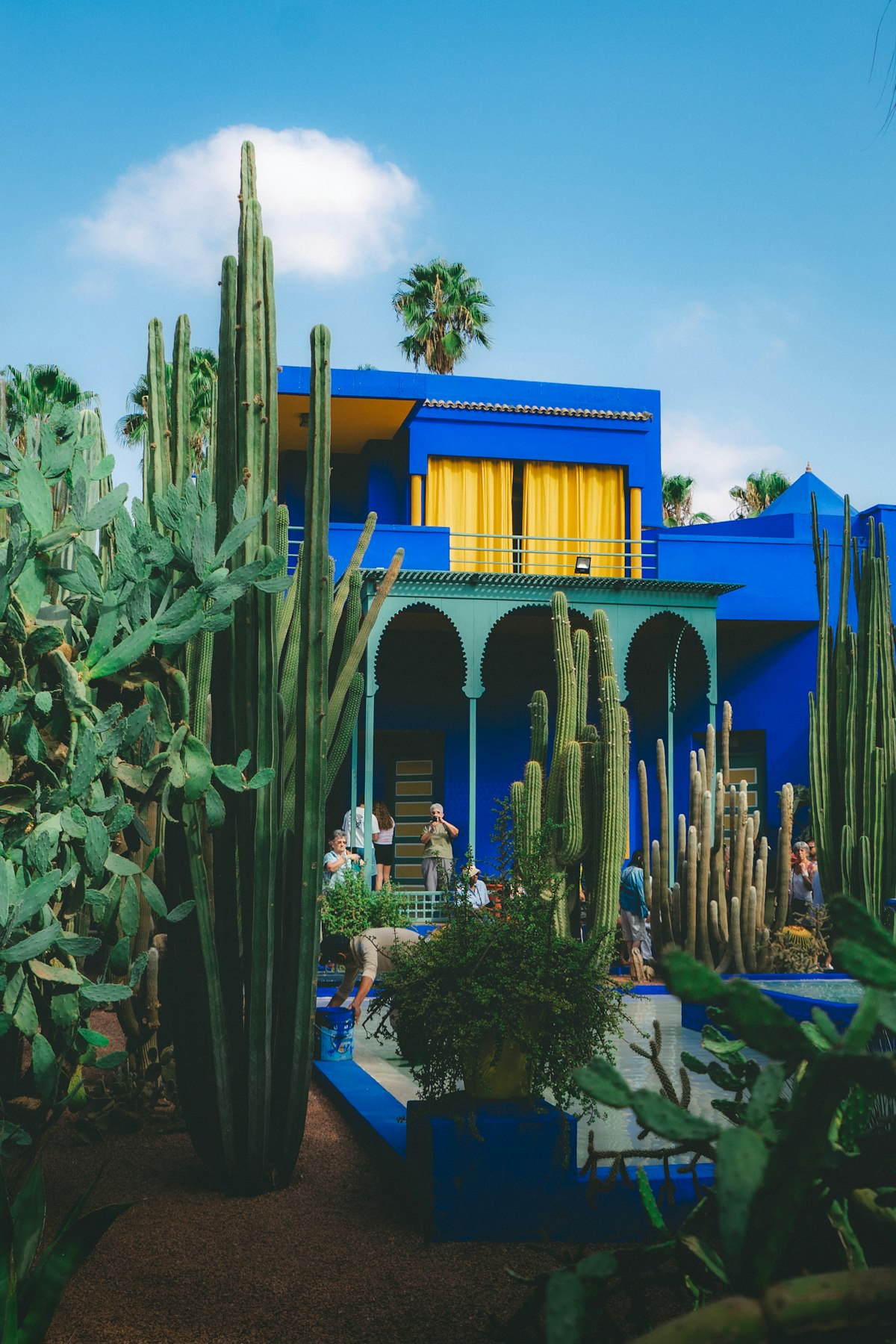
Our selection of photographs represents the garden across different times of day, different seasons and different zones, illustrating the range and diversity of its visual character. From the dramatic silhouettes of the cactus garden to the serene blue reflections in the lily ponds; from the blazing tropical colours of the bougainvillea and strelitzia to the quiet architectural beauty of the cobalt villa — we hope these images communicate something of what makes this garden genuinely extraordinary.
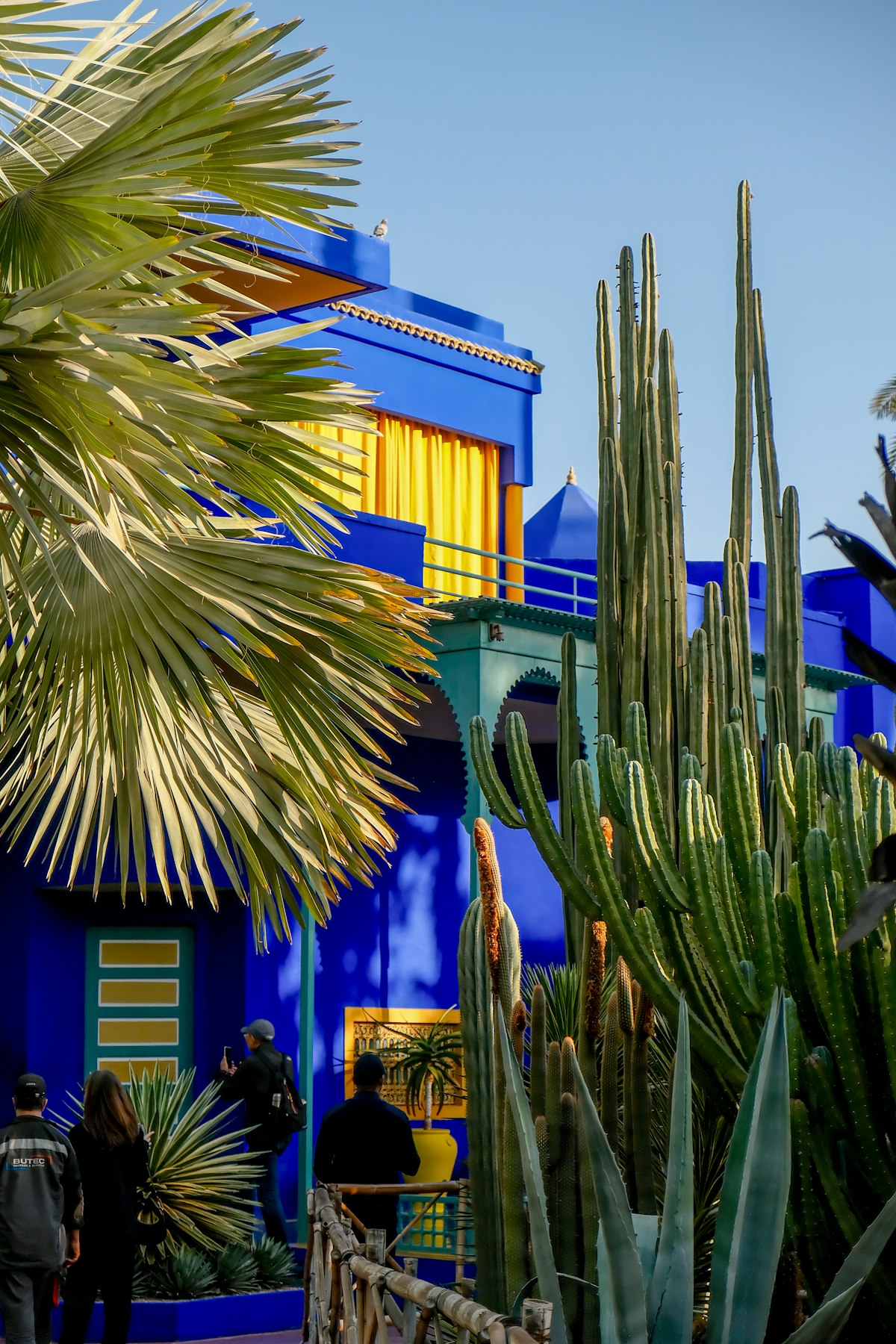
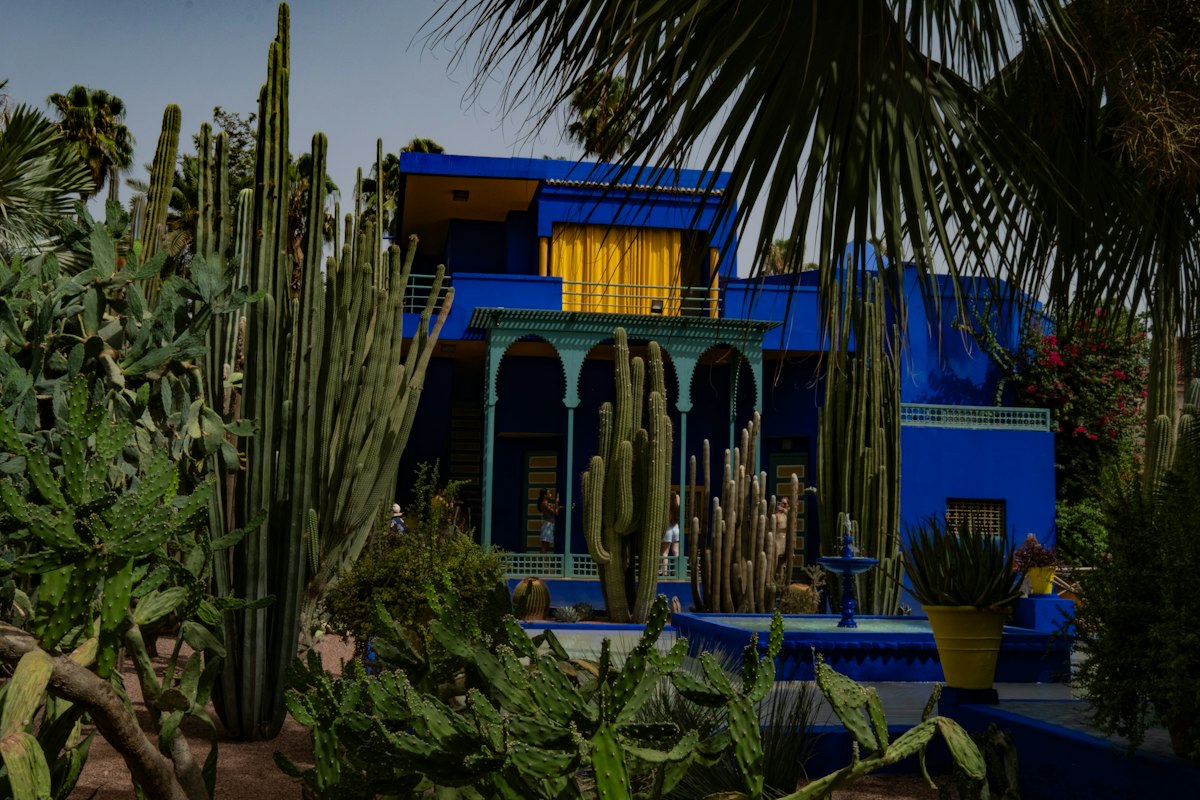
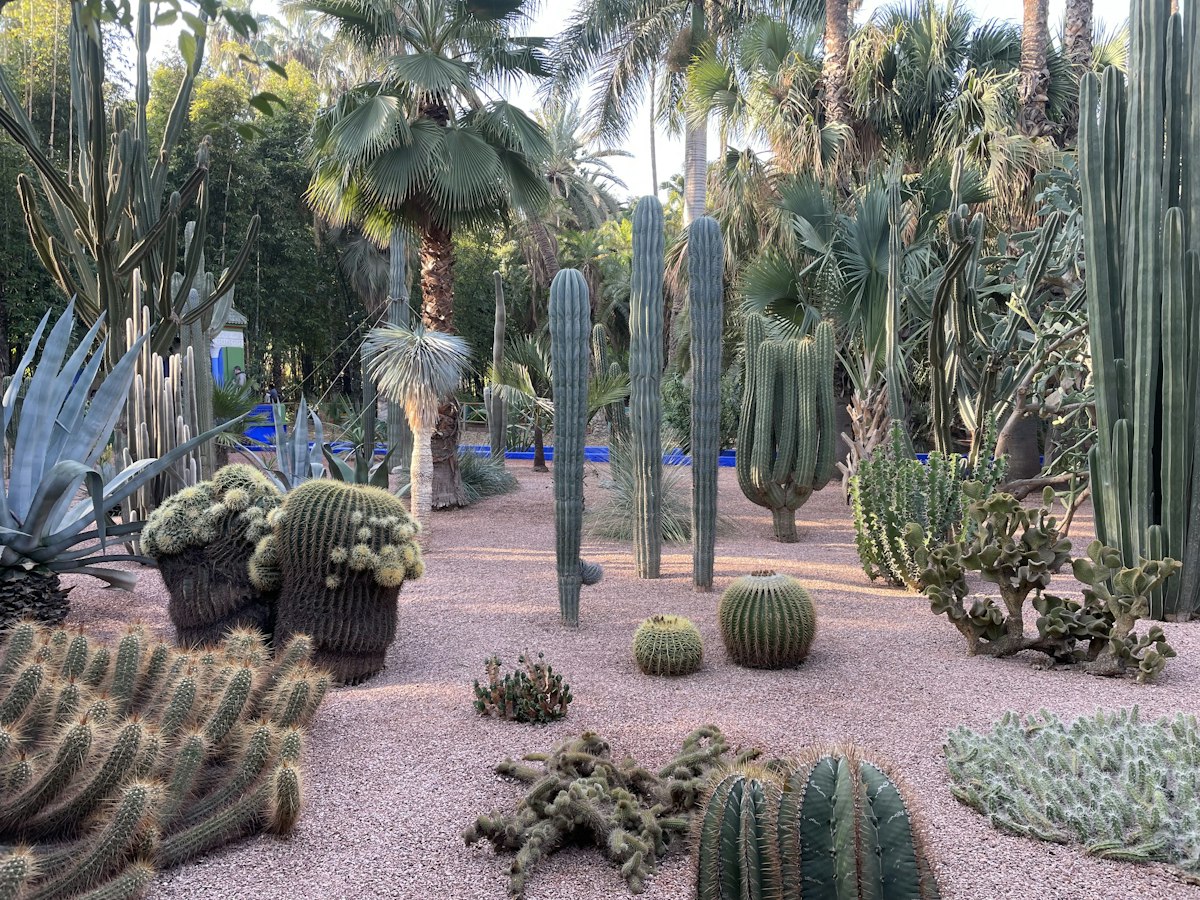
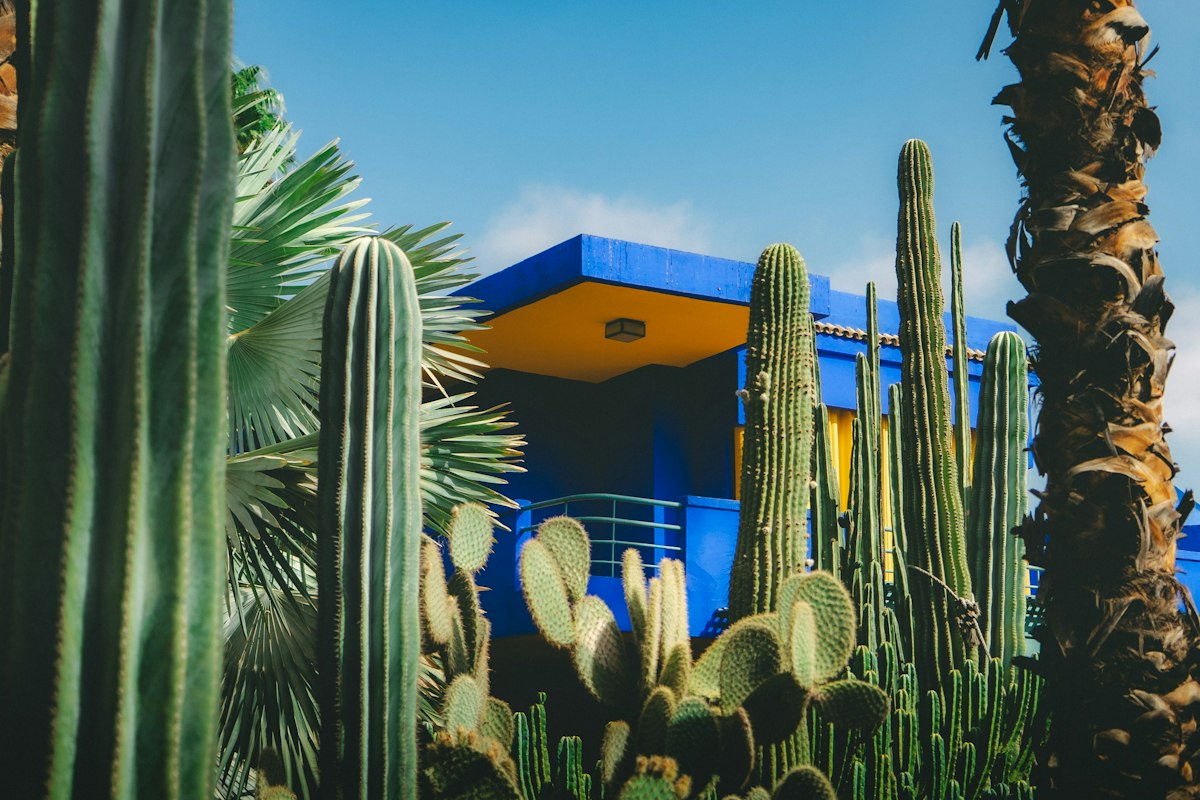
Photography Guide for Visitors
Photographing Jardin Majorelle is a pleasure but also a challenge: the garden is small, extremely popular, and at busy times almost impossible to photograph without other visitors in the frame. With a little planning, however, it is entirely possible to come away with beautiful, uncrowded images. Here are the key principles for photography at Jardin Majorelle.
Time of day matters enormously. The garden opens at 8:00 in the morning, and the first ninety minutes of opening offer by far the best photographic conditions: soft, directional morning light that catches the cobalt blue at its warmest, long shadows that give depth to the cactus zone, and a relative absence of other visitors. By 10:00 the garden begins to fill; by 11:00 on a busy day it can be difficult to find an angle on the blue villa that excludes a crowd of people.
Weather changes everything. A clear blue sky provides the most dramatic contrast with the garden's cobalt walls and yellow planters. A slightly overcast sky softens the contrast but also eliminates harsh shadows, making it better for photographing the detail and texture of plants and architectural surfaces. Direct overhead sun in summer produces flat, bleached results in the cactus zone and creates unflattering shadows under palm fronds. Late afternoon light in autumn and winter — low and golden — is arguably the single most beautiful photographic light the garden offers.
The reflections in the lily pond are one of the garden's most distinctive photographic subjects. To capture them at their best, look for a calm morning with no wind (which would ripple the surface and break the reflection) and position yourself low — crouching or even lying flat on the path edge — to include both the real blue wall and its reflection in a single frame.
Equipment: A wide-angle lens (or the wide setting on a phone camera) is useful for capturing the villa's full height within the narrow garden paths. A telephoto or portrait lens setting produces beautiful results on the plants — particularly the cacti, where the compression of a longer focal length creates striking layered compositions. Personal photography without flash is permitted throughout most of the garden and inside the Berber Museum. Flash and tripods require advance permission from the garden administration.
Etiquette: Photography of other visitors without their consent is not appropriate. If a shot requires asking another visitor to move or to wait, do so politely. Be aware that some visitors are in the garden specifically for a quiet, contemplative experience rather than a photographic one, and conduct yourself accordingly.